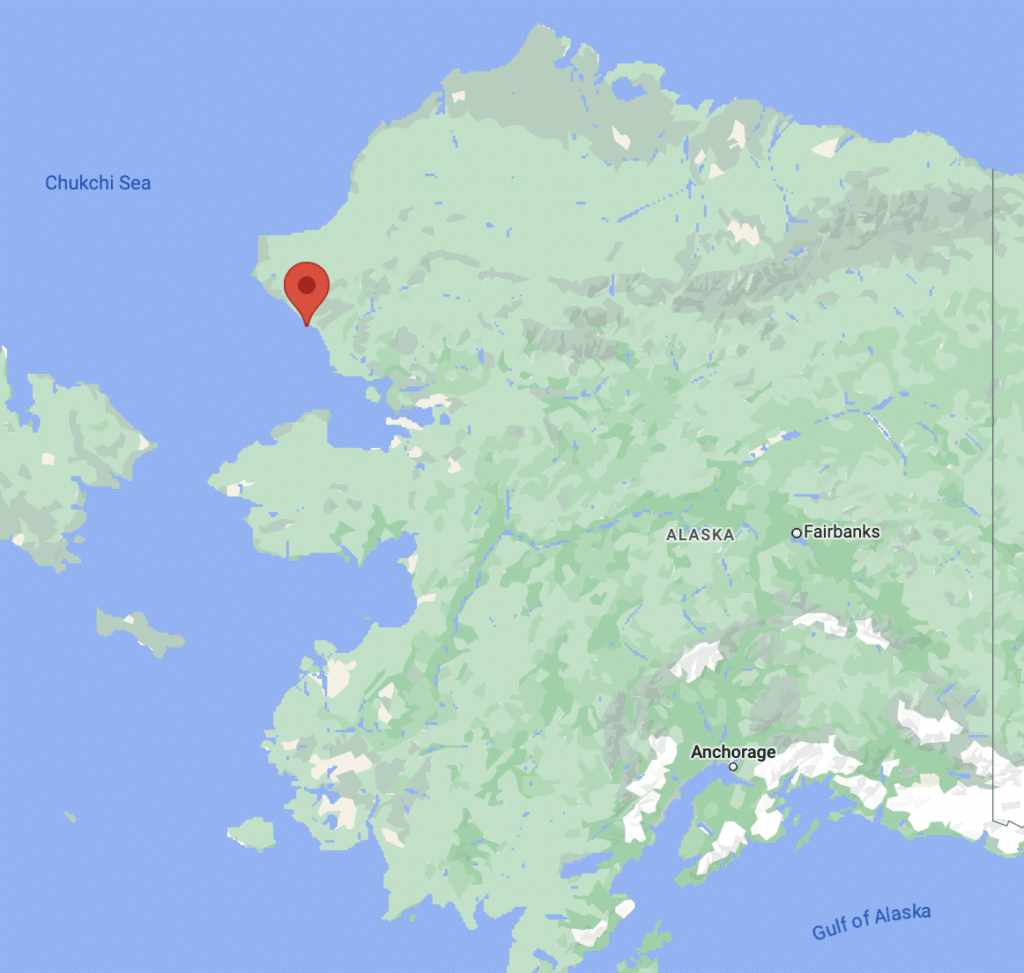
In Northwest Alaska sea levels are rising and permafrost is melting, and entire villages are falling into the sea. The isolated whaling community of Kivalina, home to around 400 people, is facing imminent relocation and the need for viable futures is urgent. For a host of reasons, previous relocation efforts in Kivalina are stalled, leaving the community looking for alternatives. ReLocate is a group of social artists from around the world working with a group of delegates from Kivalina to initiate a new, community-led and culturally specific relocation.

Using social arts methods and online media, ReLocate is building artistic and web-based platforms that intend to make the social, political, and environmental issues related to relocation visible to global audiences; support community discussion and consensus building; locate, connect and educate new relocation partners; create spaces where people in Kivalina can share original media and ideas about local identities and ways of life; and develop an infrastructure for managing global support and pursuing relocation planning opportunities.

Loading

Voices from the Flats (themudflats.net) – How Many Votes Will Lisa Murkowski Get in Kivalina?

William Takak from Shaktoolik understands the impact of climate change. The Alaska Native Science Commission quotes him in a survey of the impact of climate change[1]. “Last Spring we only got six walrus because of the weather and the ice moving out to quick. A long time ago it used to be real nice for weeks and even sometimes for months. Now we have a day or two of good weather and this impacts our hunting. The hunters talk about 

Read More »

pumpLR

Culture as Corporation – Juneau Empire

Culture as CorporationNANA shareholders adapt corporate life to the ways of the people. By LORI THOMSON, THE JUNEAU EMPIRE

At 23, Jimmy Baldwin, has racked up a sum of money most villagers only dream about. He’s poured about $100,000 into his snowmachine shop in Kiana by working behind the steering wheel of a front-end loader at the Red Dog zinc mine, owned by NANA Regional Corp.

For people such as Baldwin, NANA is fulfilling one of its 

Read More »

barrier-island-overwash1a

How Stuff Works – Barrier Islands

How Stuff Works Barrier Islands

engineering

Get to know Kivalina

Kivalina Infrastructure Map


Section 3.9 - Alternatives, Igrugaivik Site

2006 Army Corps Kivalina Relocation Master Plan

Link to the Corps’ plan.


Mapping the Political and Economical Entities

The area where Kivalina originated from is rich both in soil and in subsistence. Over hundreds of years the people in Kivalina have been living of hunting, fishing and picking. The rich grounds filled with Zinc and Iron have led to the opening of the Red Dog Mine. The Red Dog mine is the largest Zinc mine in the world and is a huge source of income to the NANA region. The mine bought the land out of NANA back in the 1980 

Read More »

NANA Kivalina

NANA Kivalina Information Page

Link

the camp in evening

Spring Whaling Camp

Kivalina_Consensus_Building_Project_Final_Report_July_2010 copy

Kivalina Consensus Building Project 2010

Kivalina_Consensus_Building_Project_Final_Report_July_2010

Kivalina_survey_summary

Situation_Assessment_Final_July_2010

final_annotated_bibiliography_July 2010

fish drying racks 2

Traditional architecture

People in the Kivalina region were historically nomadic and lived in various types of seasonal housing. The longest time people would stay at the same place was three months in mid winter and three months during spring. Location was dependent on seasonal subsistence practices.

Along the coast people lived in sodhouses, at the river they used willow branch and moss structures, and in the hills they stacked rocks to build housing. People also used willow and caribou hide tents 

Read More »

kivalina 2

Ownership Structures

The following section is focused on the ownership-structure in Kivalina. According to the 2010 census, 374 people are living in Kivalina in 99 houses, of which 85 are in use; in 2012 we counted 112 houses in the village. The housing units are located on the southern end of the peninsula, because the landfill and the airport (property of the state) to the North do not allow room for community expansion. Two streets, Channel and Bering, run through Kivalina 

Read More »

lucy inside a 2

Residential housing conditions

Being on site in Kivalina in August and September 2012 we had to learn that the buildings are in a relatively low condition. Even nowadays, none of the residential houses in Kivalina come with a sewage and water system. Instead of using a toilet, people are using honeybuckets made of plastic. The houses’s waste and honeybucket storages on the streets are spilling over, water which is usually collected from one of the two watertanks in the city, couldn’t 

Read More »

Kivalina Landfill 2

Waste(d)?

In Kivalina each household is responsible for collecting its own waste and bringing it to a 3.4 acre dump site, located just north of the airport. There is no separation system in the city. All solid and human waste ends up at a non-managed landfill. Although seeing a lot of the residents disposing their waste to the landfill, garbage is pilling up around the city, human waste spilling out of the plastic bags.

See Google 

Read More »

bingohall

Public Spaces in Kivalina

The cold climate in Kivalina forces the public interactions and assemblies to be held indoors.

1. The community center and Bingo Hall

The community center, located in the center of the village, is used in special events for public gathering (f.ex. Community meetings, or when a whale is caught for a feast), but also regularly for traditional Eskimo dancing classes. Next door’s Bingo Hall is owned and operated by the municipality, but was on suspension period 

Read More »

IMG_0676

On foundations

The melting of the permafrost in the North Arctic region causes a shifting of houses which eventually damages the buildings and results in cracks of walls and windows. In Kivalina, only the school’s foundation 

Read More »

Fire hose to connect to Old Water Plant

Threats to Kivalinas Water System:

The Material: Part of the existing water and sewage system in Kivalina is now 36 years old and therefore at the end of its expected life span.

Apart from that the pipe-line which connects the river with the water treatment plant when being re-filled is broken. This is a result of the most recent storm in the area happening in mid August 2012:

Read More »

Water Tank with Pipe

Water and Sewage System

The following section focuses on the system of water supply and waste water treatment in Kivalina based on an on-site research, done between August, 27th and September 3rd 2012: 

TECHNICAL INFORMATION SHEET

Kivalina relies on water coming from the Wulik River. The water is being collected about 2 and a half miles upstream. Usually the water tanks are beiRead More »

Kivalina from above

Water Situation in Kivalina, August 2012

Situated on a small island – the Chukchi Sea to the west, a lagoon and the mouth of the Wulik river to the east – Kivalina is surrounded by water. Potable water on the other hand is not so accessible in this Arctic town. When we arrived in late August 2012 Kivalina faced a severe lack of potable water due to another heavy storm in the area of NW arctic Alaska.

See: Residents collecting 

Read More »

Rainwater Collection

Sources of Access to Potable Water in Kivalina

  • Outside the water plant building there is a coin operated machine where people buy their water (25ct. per 5 Gallon).
  • People go upstream to collect water from the river. To do so, access to a boat and fuel is needed. Usually they collect from the Wulik river. Since the Zinc Mine discharges into the water shed of the Wulik river, Read More »

“Storms Force School Postponement in Kivalina”

A few of us from the Re-Locate Project flew back to Anchorage from Kivalina last night to start pulling together all of the information, stories, and research from our weeklong trip to Kivalina. (Photo: aerial view of Kivalina from yesterday’s flight.) Today, for the first time in over a week, we are showered and have a reliable internet connection.

We arrived in Anchorage to this headline in the Read More »